How to Support Mitochondrial Health in Brain Cells and Avoid Developing Neurodegenerative Diseases
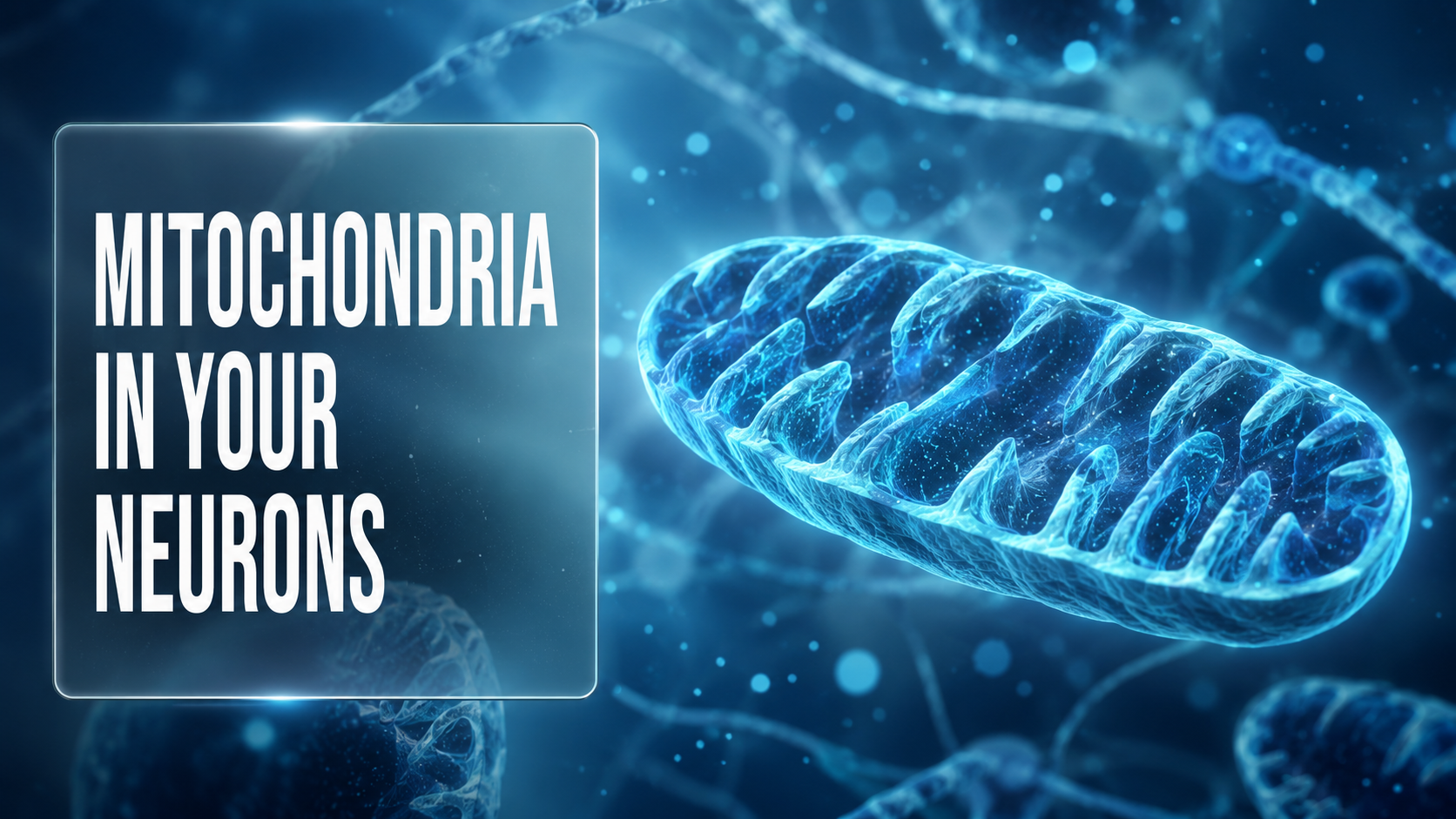
So, mitochondria, friends.
In one of the previous articles, I mentioned that there would be a separate piece on this topic.
This is it.
Modern science is increasingly coming to the conclusion that the state of the mitochondria is the foundation, the starting point of full-body health.
In this post, I will explain why, in the end, this is where the health of your brain and your entire body begins and ends.
How neurodegenerative diseases are closely linked to mitochondrial dysfunction. And what exactly to do so that these tiny things feel good — and you can benefit from that for as long as possible.
Let’s Start With a Simple Definition
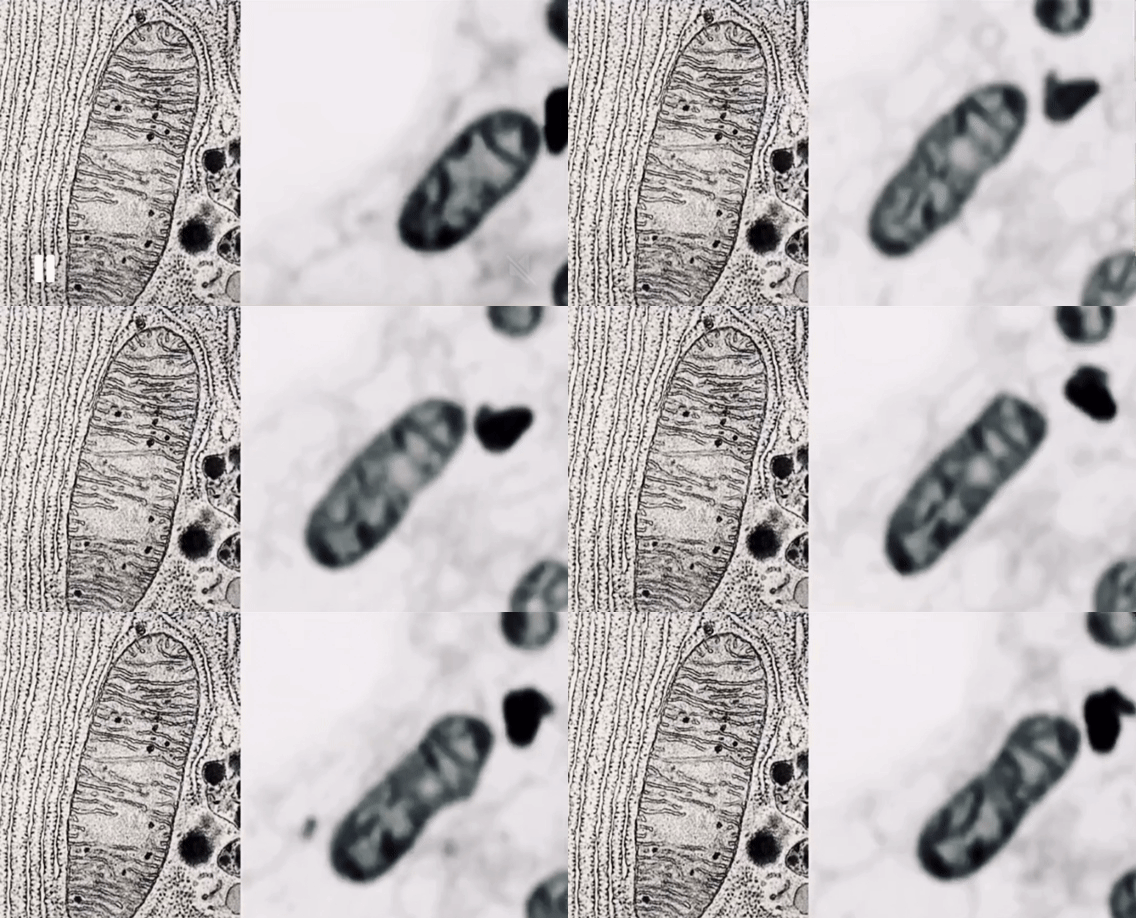
Mitochondria are tiny bean-like structures — the main epicenter of everything that happens in our body.
Without enough healthy mitochondria, cellular functions weaken, which leads to dysfunction across all organs and systems.

Now I’ll try to explain this evolutionary masterpiece through a superhero metaphor.
Watch the video.
The Superhero Metaphor Explains What Happened About 2.5 Billion Years Ago
This superhero metaphor roughly explains what happened about 2.5 billion years ago to our single-celled ancestor, which swallowed a tiny proto-bacterium.
You can see the impressive consequences of that in the mirror.
If that act of eating had never happened, you simply would not exist.
At least not in such a stunning form.
The mitochondrion is that very tiny proto-bacterium we swallowed.
It simply went through adaptive changes during evolution.
And it helped us become who we are.
Because it was originally very independent, it has its own mitochondrial DNA, or mtDNA. Only circular, unlike the spiral-shaped DNA of the cell.
And this mtDNA is passed down only through the maternal line.
Geneticists even calculated something and proposed the theory that about 200,000 years ago, a woman lived in Africa — “mitochondrial Eve” — from whom all modern humanity received its mtDNA.
Okay, let it be.

So What Are Mitochondria Doing?
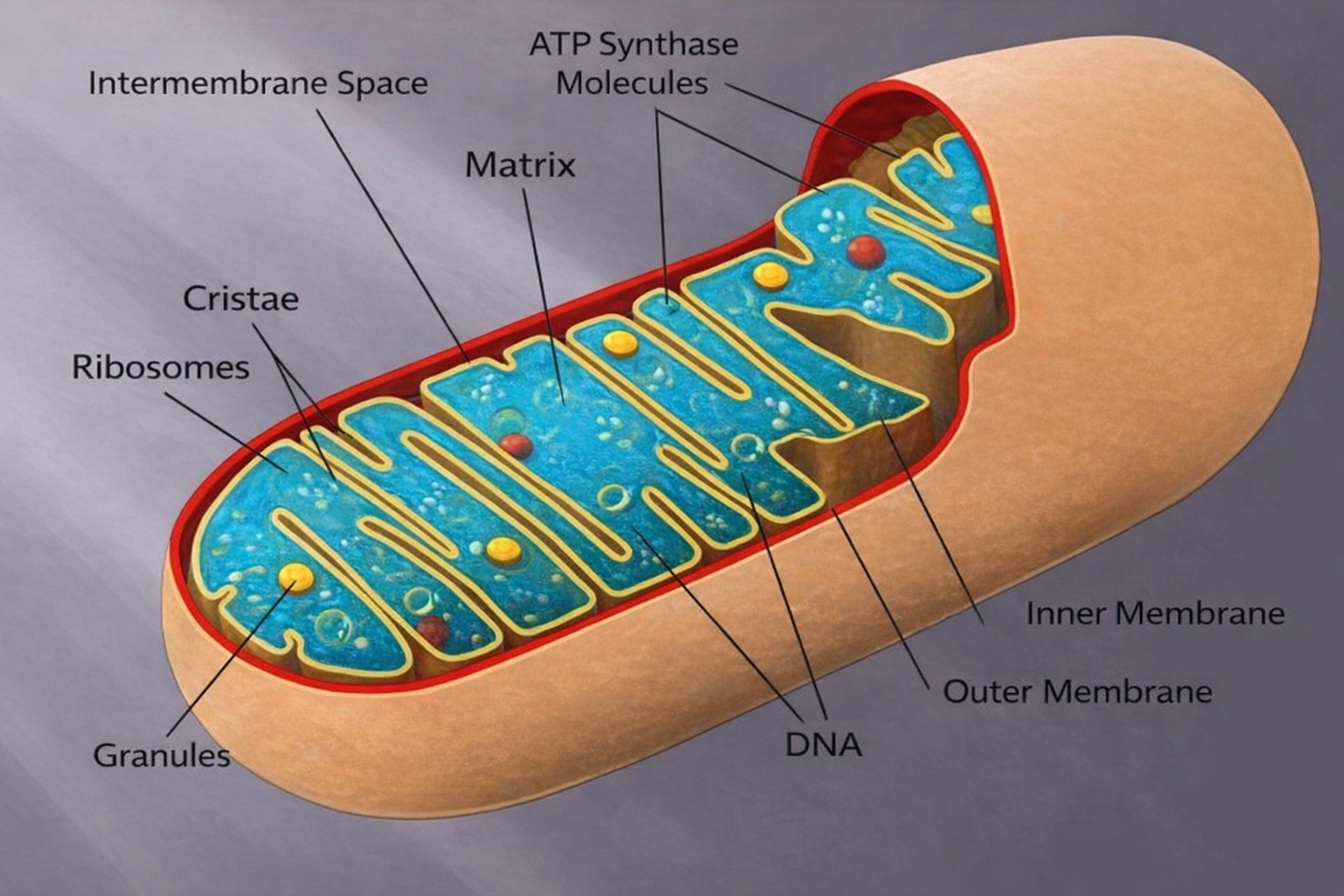
Mitochondria — and there are, on average, from several hundred to several thousand in each cell — are the very reactors that convert fats and carbohydrates from food into the energy we need: ATP molecules, adenosine triphosphate.
ATP is the universal molecule used to store energy in cells.
This energy is what keeps the entire body functioning.
For us, the most important point is that mitochondria are the foundation of whole-body health.
Problems with them mean problems with everything.
The real stars among mitochondria are the ones living inside brain neurons.
They are constantly moving, traveling through neurons like mail carriers — bringing energy exactly where it is needed most.

The Brain Is the Body’s Main Energy Consumer
You do know that the brain is the body’s main “energy consumer,” right?
Its mass is only about 2% of total body weight, but it takes for itself from 15% of all energy in a resting state — when you are lying on the couch and simply staring at the ceiling — up to 20–25% in an active state.
As if a small administrative center were taking one fifth of the entire country’s energy supply.
And Here a Logical Question Appears...
.png)
Glucose is a fast source.
It gives energy instantly. But inefficiently.
It is like living on fast food — you quickly silence hunger by throwing garbage into yourself, and that garbage will pile up and remind you about itself later.
From one molecule of glucose, you can squeeze out 30–32 ATP molecules.
Sounds decent. But do you know how much a fatty acid can give?
Up to 106 ATP molecules.
Fats are slow, stable fuel.
Glucose is a quick shot. And its excess causes oxidative stress. Oxidative stress damages and shortens mtDNA. Mutations appear.
And if “defective” mitochondria appear in the cell, they begin to multiply faster than healthy ones and push them out, because they need less energy and lower energy quality.
Just like in life, right?

And This Is a Snowball
Damaged mitochondria no longer perform their main functions properly.
Look...
1/5. Energy Production
Generating ATP, supplying energy for all processes inside the neuron, including nerve signal transmission.
2/5. Protection Against Oxidative Stress
Taking part in neutralizing reactive oxygen species and protecting neurons from damage.
3/5. Cellular Metabolism
Affecting metabolism by participating in the metabolism of fats, proteins, and carbohydrates to support the life of the neuron.
4/5. Calcium Regulation
Controlling calcium levels inside the cell, which is important for signal transmission between neurons and for preventing cell damage.
5/5. Apoptosis
Programmed cell death.
They regulate the process of programmed cell death, helping to “remove” damaged cells and preventing further decline in brain function.
The Consequences?
When mitochondria stop performing their function effectively, neurons, in turn, begin to accumulate damage.
This is directly linked to accelerated brain aging and the development of neurodegenerative diseases.
Knowing how to influence the state of mitochondria may help prevent this.
This is the comprehensive approach I mentioned in the previous post:
- nutrition
- physical activity
- sleep optimization
- a cognitively enriched environment
Each of these keys has its own powerful, proven effect on mitochondrial health at the biochemical level.
And in Conclusion: How Do These 4 Keys to Brain Health Work Through the Health of the Mitochondria Themselves?
1. Low-Carbohydrate Food
Adjusting intake and avoiding refined carbohydrates and sugar reduces the level of daily chronic oxidative stress and hidden inflammation. Posts #10 and #16.
A high intake of fats — omega-3s, monounsaturated fats, and yes, even saturated fats — is critically important for supporting mitochondrial function.
Periodic restriction of calorie intake, or intermittent eating, activates mitophagy: the process of removing damaged mitochondria and creating new ones, which helps improve metabolism and support cellular health.
2. Sleep
Quality and sufficient sleep is critically necessary for mitochondrial recovery. During sleep, cellular structures are renewed and the oxidative damage accumulated during the day is actively processed.
3. Sport
Aerobic and strength training trigger biogenesis — the formation of new mitochondria — and increase their efficiency.
4. A Rich Cognitive Environment
Constant cognitive stimulation of the brain helps activate mitochondrial processes in neurons, improving their resistance to stress and aging.
Here It Is — The Body’s Energy Currency
This is magic. Watch how a mitochondrion produces ATP, without which not a single system works.
Muscles, brain, heart — all of them depend on this tiny molecule.
ATP is our energy, our strength.
It is astonishing how, inside such a miniature process, the whole magic of our existence is hidden.