An Insidious Dementia Risk Factor
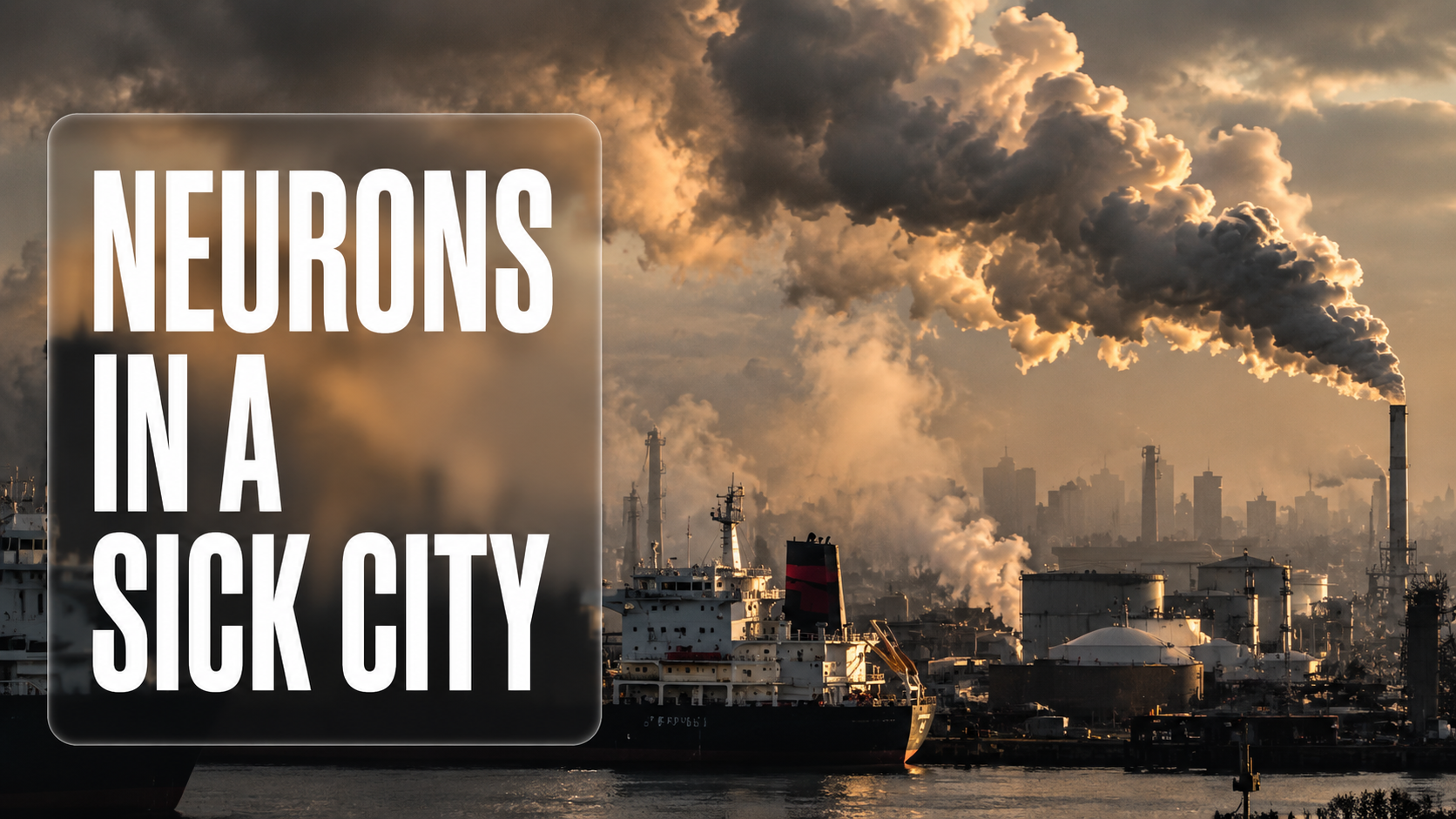
Yes, we all know about climate change, melting glaciers, and environmental crises. And maybe, against the background of constant information noise, the topic of ecology now causes more fatigue than anxiety.
That is why most people no longer react — too many slogans, conflicting facts, and political games.
And honestly, who can think about global problems for long when they have their own personal ones?
But the external environment does not waste time on debates. Its laws work regardless of our fatigue and opinions.
So why did The Lancet Commission include environmental pollution as one of the 14 risk factors for developing dementia?
We are used to thinking of polluted air as a threat to the lungs and heart.
But more and more scientific studies show that polluted air also hits the brain hard.
A Study Published in Environmental Health Perspectives Became One of the Major Turning Points in This Field
Scientists analyzed data on PM2.5 exposure among participants from 1978 to 2018 as part of the “Adult Changes in Thought” study.

Data: 4,166 people
Diagnosis: dementia-related impairments were identified through regular examinations every two years.
Result: an increase in PM2.5 concentration by 1 μg/m³ raised the risk of dementia by 16%.
This is a lot, especially considering that pollution is not the only factor.
This study clearly shows: the higher the level of air pollution, the higher the likelihood that a person will face memory and cognitive problems.
And this is far from the only environmental threat to the brain.
But First, What Is PM2.5 and Why Is It Dangerous for the Brain?

PM2.5 refers to tiny solid particles and droplets in the air with a diameter of 2.5 micrometers or less. They are so small — about 30 times thinner than a human hair — that they can travel deep into the lungs and partially enter the bloodstream.
Where do they come from?
- vehicle exhaust;
- fuel combustion;
- industrial emissions;
- wildfire smoke;
- some particles form directly in the atmosphere from gases.
Why They Are Dangerous for the Brain
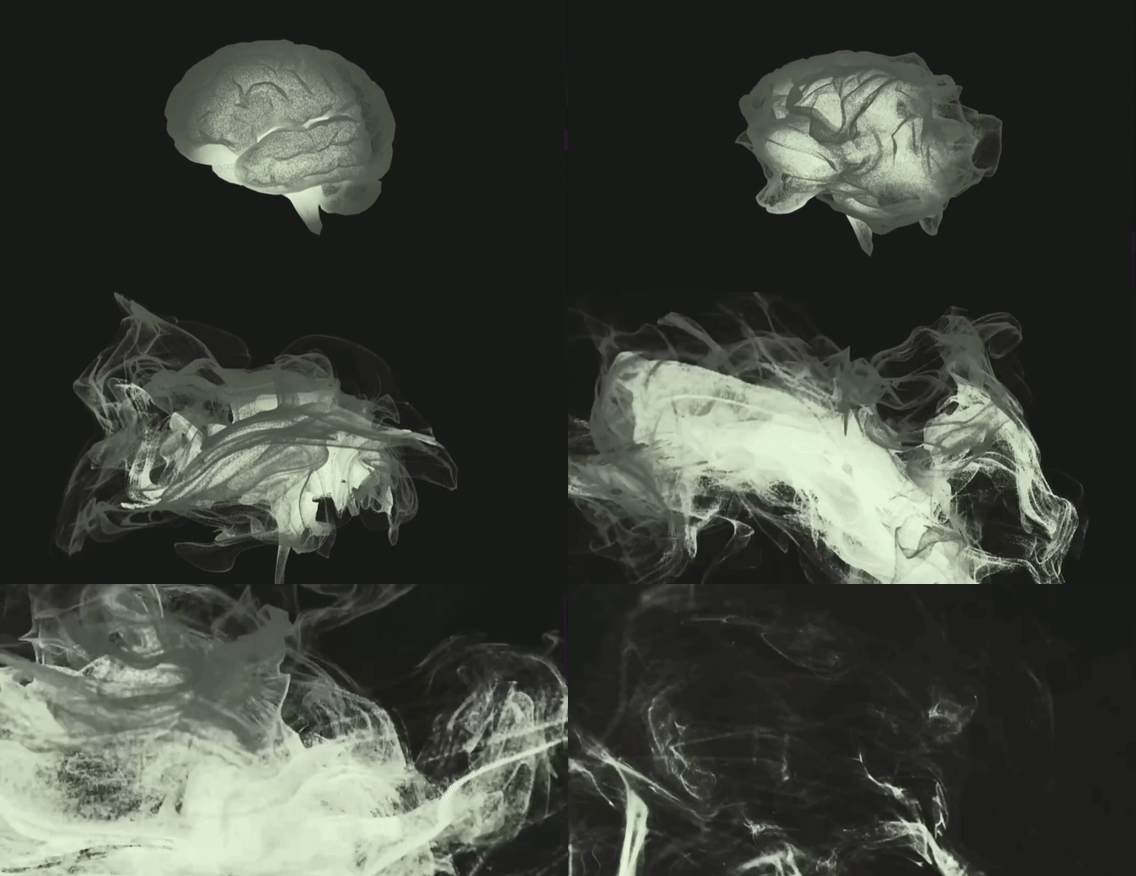
1. Systemic inflammation increases.
After inhaling PM2.5, systemic inflammation increases in the body — one of the key factors contributing to the development of Alzheimer’s disease and other forms of dementia. This can affect brain tissue.
2. They damage blood vessels.
These particles are linked to deterioration of the vascular wall, a higher risk of atherosclerosis, and impaired blood supply to the brain. This matters for memory and cognitive function.
3. Oxidative stress is triggered.
When PM2.5 particles enter the brain, they launch inflammatory processes. Neurons begin to “catch fire” from oxidative stress, as if they were under attack by free radicals. This process damages cell membranes, proteins, and DNA.
4. They may affect the blood-brain barrier.
This is the protective system between the blood and the brain. When it is damaged, harmful substances can affect brain tissue more easily.
5. There is evidence of a direct route through the olfactory system.
Some ultrafine pollutants may enter the brain not only through the blood, but also through the nasal passages. This is one of the proposed mechanisms.
6. Damage to the hippocampus — the memory center.
One of the key targets of PM2.5 is the hippocampus, the brain structure responsible for memory and learning. Studies show that chronic inflammation in this area disrupts neurotransmitter synthesis and reduces synaptic density. This is one of the reasons long-term exposure to polluted air is associated with memory decline.
7. Reduced neurotransmitter production.
Neurotransmitters are the brain’s chemical “messengers” that transmit signals between neurons. Under the influence of PM2.5, their synthesis slows down. A lack of dopamine and acetylcholine, for example, leads to poorer attention, concentration, and mood. In some cases, this becomes a warning sign of neurodegenerative disease.
Bottom line: the danger for the brain is not that PM2.5 “poisons” it instantly, but that long-term exposure is associated with a higher risk of memory decline, reduced cognitive function, stroke, and, according to a number of studies, dementia.
And This Is Not Only About Air
In water, in food products — mercury in fish, pesticides on vegetables and fruit — in hygiene products, such as aluminum in deodorants, shampoos, and creams, in cookware, furniture, wallpaper, plastic windows, stretch ceilings, clothing and bedding fabrics, and in the walls of houses, where asbestos and lead may be found in paint and water pipes.
“Sick Building Syndrome” Is Not Some Kind of Folklore
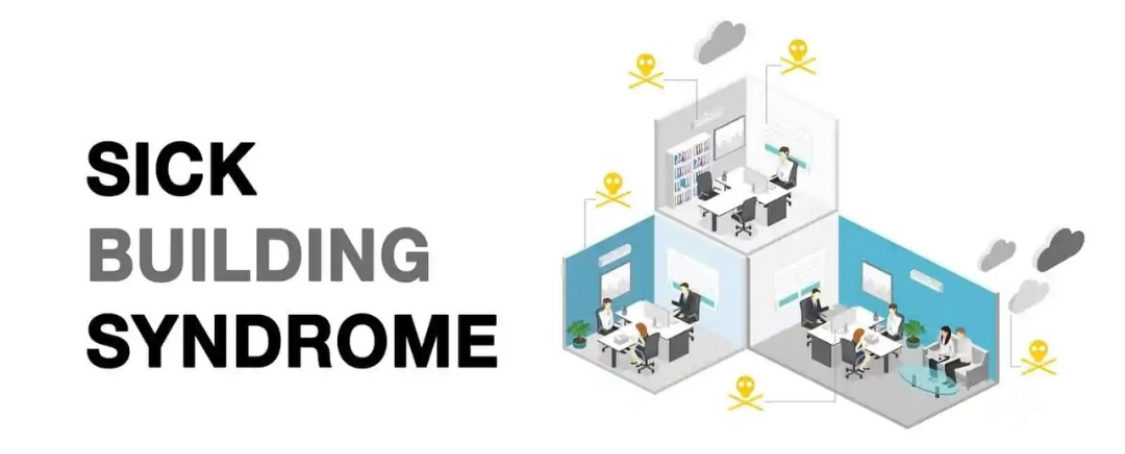
Sick Building Syndrome, SBS is a term used to describe a group of symptoms that occur in people who spend a lot of time in certain buildings and disappear after they leave that building.
In fact, today scientists have enough grounds to speak about the existence of a real condition caused by dirty indoor environments.
This is sick building syndrome, and it affects about 25% of people who work in spaces without proper ventilation and air circulation systems.
In other words, these numbers are absolutely huge. Insane, really.
A lack of fresh air leads to the accumulation of pollutants: chemicals from furniture, glues, and paints; microbes; mold; and bacteria that spread because of high humidity.
We Cannot All Move to an Ideal World
In the modern world, it is already impossible to completely avoid exposure to pollutants.

So you find out that your neighborhood is environmentally unfavorable.
And what are you supposed to do with that?
Run? Where?
Moving means huge costs, changing jobs, changing schools for the children.
And who can guarantee that the new place will actually be clean?
That is exactly why pollution is one of the most difficult risk factors for developing dementia.
But this is how we live. Today, neurotoxins are everywhere.
It Is Impossible to Completely Avoid Polluted Air. But There Are Things We Can Influence

The main point: for the brain to remain healthy, it is important to strengthen the body’s ability to resist.
A strong body means — nothing changes here:
- low-carbohydrate nutrition
- proper sleep
- regular physical activity
- and building cognitive reserve
This is the foundation that can help protect us even from the inevitable weakening of neurons.
At the very least, purify indoor air with HEPA filters and add antioxidants to your diet, at least such as:
vitamins C, E, coenzyme Q10
They protect the brain from oxidative stress.