The Paradox
How many people have already fallen into this trap?
Or are just about to.
If diseases from the list of 14 risk factors for developing dementia, included in the official Lancet commission report, are not treated in time, they will continue to destroy the body — and eventually begin to destroy the brain.
But if they are treated thoughtlessly, according to standard protocols, this can also lead to dementia — only by a different route.
In this article, we return to the third “hidden” risk factor, which we have already mentioned in one of the articles. And which is unlikely to be included in official reports.
DID — “drug-induced dementia.”
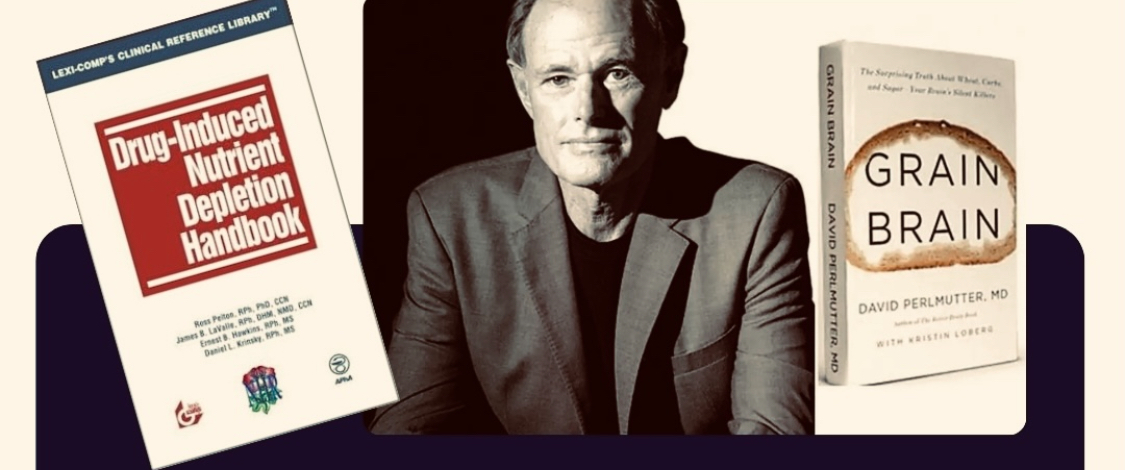
The data comes from the work of David Perlmutter and the Drug-Induced Nutrient Depletion Handbook — a real source of knowledge about the possible negative side effects of medications.
We do not even suspect that we may be under threat from the very thing we have always considered our rescue.
In my view, this information is extremely important, because it can affect every one of us.

Drug-Induced Dementia Is Not an Official Diagnosis
DID is not a strictly scientific term or an official medical diagnosis accepted in international disease classifications such as ICD-11, the International Classification of Diseases, or DSM-5, the Diagnostic and Statistical Manual of Mental Disorders.
However, it is used in clinical practice and literature to describe cognitive impairments caused by long-term or improper use of certain medications, especially those that affect the central nervous system.
Officially, another term is used — one that reflects the problem only indirectly:
Polypharmacy is a condition in which many medications are taken at the same time, which can cause unpredictable effects and increase the risk of adverse reactions.
So, We Know About 14 Risk Factors for Developing Dementia

Among them:
- depression
- diabetes
- obesity
- hypertension
- cardiovascular disease
At the same time, some groups of medications that are supposed to protect us actually deplete the body of substances that protect it from free radicals and inflammation in the brain.
For example, coenzyme Q10 and glutathione — two powerful antioxidants that protect the brain from free radicals and inflammation. Losing them is like removing security from a bank.
Dozens of medications deplete B vitamins, which are no less important, because they help control the level of homocysteine — one of the amino acids.
When its level is too high, it also provokes inflammation and destroys brain cells.
As One Illustration of This Topic, Let’s Take Statins
Because they are among the most commonly used medications.
First, let’s look at an incomplete list of cases when statins may be prescribed:
- Coronary heart disease
- Prevention of myocardial infarction and stroke
- Dyslipidemia, or hypercholesterolemia
- Type 2 diabetes, when cardiovascular risk is high
- After heart and vascular surgeries: bypass surgery, stenting, angioplasty
- Familial hypercholesterolemia
- Prevention of cardiovascular disease in people at high risk
- Chronic kidney failure, when cardiovascular risk is high
- Metabolic syndrome
- Peripheral artery disease
Next: how statins affect the brain

Medications containing statins, which help lower cholesterol levels, may, with long-term use, deprive cells of the coenzyme Q10 they need, according to David Perlmutter.
Q10 is a key antioxidant and “energy source” for the brain. It is synthesized in every cell of the body, but it is especially important for the brain.
Unlike water-soluble antioxidants, Q10 passes through the fatty membranes of brain cells and protects them from free radicals.
At the same time, it takes part in the production of ATP in mitochondria — read the article on mitochondria — the main source of energy for all cells, including neurons.
What happens when Q10 is deficient?
The brain “sags” on two fronts at once.
Energy deficiency:
brain cells do not receive enough ATP, which slows down their work.
Oxidative stress:
free radicals damage neurons, worsening memory, attention, and learning ability.
A lack of Q10 triggers a cascade of problems:
- reduced energy
- increased damage from free radicals
- neurotransmitter deficiency, meaning a shortage of the substances responsible for mental sharpness and memory
Groups of Medications That May Deprive the Brain of Vital Resources

The most common groups of medications which, with long-term — and especially constant — use may deprive the brain of vital substances that protect it from free radicals, provoke inflammation, and in some cases even lead to aluminum accumulation in the brain.
For example, antacids — medications that reduce stomach acidity, such as Almagel, Maalox, or Gastal:
- antidepressants
- contraceptives
- hormone replacement therapy
- painkillers, even analgin
- statins, used to lower cholesterol
- antipsychotic medications, or neuroleptics
- blood pressure medications
- antidiabetic medications
- antibiotics
- corticosteroids, or anti-inflammatory medications
- anticonvulsants
- asthma medications
- acetaminophen, also known as paracetamol
This Article Is Not a Call to Stop Taking Medication
After my father’s heart attack and surgery, his heart was working at no more than 30–40%. But he lived another 20 years. A calm, happy life. Partly thanks to those very same protocols.
But in the end, heart failure and the ton of medications I have been talking about led him to this diagnosis. In his case, he simply had no other chance…
Is There Something to Think About Before You Have to “Get Treated”?

For example, how often we reach for pills to put out a fire.
Although this is already a sign that it is very important to correct the entire lifestyle right now, so that you do not have to spend your life sitting on pills.
- switching to a low-carbohydrate diet
- normal sleep
- physical activity
- and cognitive load
But all of this sounds too simple, and therefore gets dismissed as banal and insufficient.
And this is the whole point of this project — to get through.
My personal memo is a summary of Dr. Perlmutter’s work.
I gathered all the medications he lists, their generic names, and divided them into groups: what lowers coenzyme Q10, what hits B vitamins, what interferes with glutathione production.
This allows you to at least understand what to pay attention to.
If you or your loved ones still had to take something from this list, it is important to know what to ask your treating doctor: about the duration of use, alternative options, and which additional supplements or medications may help reduce side effects.