I walked into the kitchen and froze, staring into the fridge as if I were seeing it for the first time…

Suddenly, I forgot why I had come there. Although a minute earlier, I had a noble mission: to make my wife mint tea.
Instead, I was staring at the vegetable shelf.
On the way there, my thoughts had managed to fly off somewhere into space.
Why does this happen?
This is not about “that’s it, we’re done, dementia has begun, early stage,” or anything like that.
We are always busy with whatever matters most to us at that particular moment.
Like a navigator that does not manage to recalculate the route quickly enough when it changes, we can miss something.
The brain simply switched to autopilot at that moment and moved on to some higher-priority task than recognizing a kettle among a pile of food in the fridge.
These short-term memory lapses happen because of momentary loss of focus — not ideal, but generally within the normal range.
In this post, I talk about three types of pseudodementia.
This will help orient those who have ever had the thought that something may be wrong with their memory, or with the memory of someone close to them.
Especially dedicated to hypochondriacs and to those who love looking for black cats in dark rooms.

Things like this do not happen often, but every time they do, I ask myself one important question:
“At that moment, was I focused on something else? On my own thoughts, tasks, plans?”
So far, the answer is usually yes.
My brain was solving something “more important” at that moment.
Then there is nothing catastrophic about it, although better focus would not hurt — and there is definitely room to improve.
But if one day I start answering this question honestly more and more often:
“Yes, I forgot. I simply forgot.”
Then I will start thinking about more serious causes.
There Are Three Main Causes of Pseudodementia

- Psychological
- Deficiency-related
- Medication-induced
Let’s look at all three.
In the early stages, when there are still no neurodegenerative changes in the brain caused by these factors, everything may still be reversible.
Psychological
The first person to notice this interesting feature in the 19th century was Carl Wernicke, a German psychiatrist.
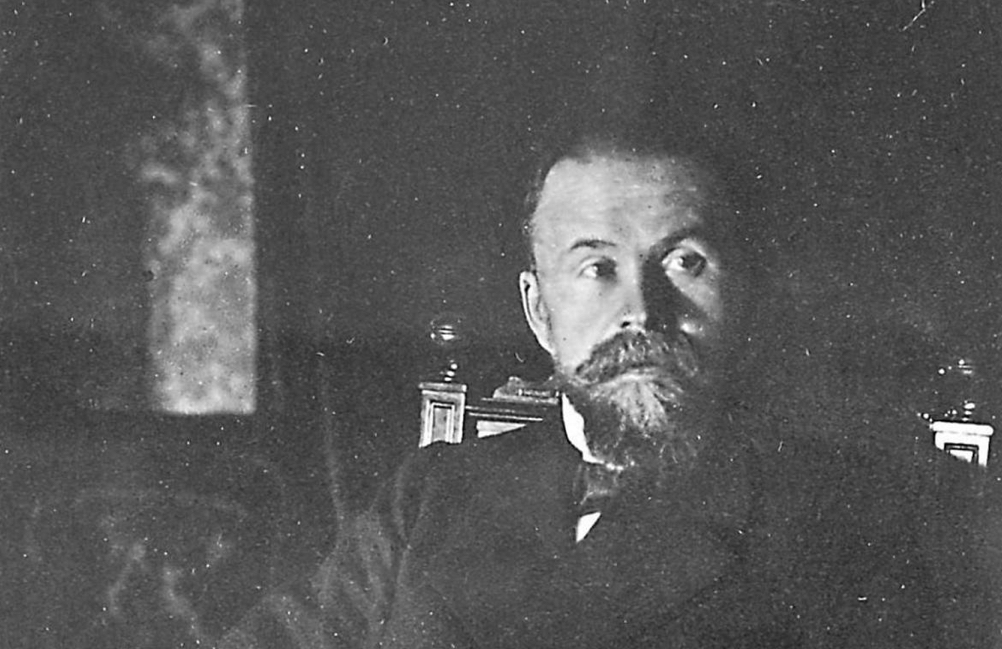
He is known for discovering the area of the brain responsible for receptive language processes in the superior temporal gyrus — Wernicke’s aphasia.
He saw people who looked lost and showed all the signs of dementia. But something did not fit.
The causes could not simply be written off as physical brain damage, as happens with true dementia.
In these observations, symptoms typical of dementia became reactions to stress that was too strong or too prolonged.
And for the brain to start playing these games with a person, no special tendency toward dramatization or hysterical character is required.
There may be many causes
A person may be going through serious psychological trials at this stage of life.
Trauma, chronic stress, life circumstances that break them and press down on them.
Maybe someone close died. Maybe the person lost everything they had, survived a catastrophe.
Maybe they simply cannot cope: life demanded too much.

Or they may have a strong desire to receive something from others, or from life in general, but at this stage of life it is impossible.
Externally, pseudodementia caused by psychological distress can look very similar to true dementia.
But despite the similarity of symptoms, there are a number of signs that help distinguish them.
Distinctive Signs of Pseudodementia of Psychological Origin

- Sudden onset. Pseudodementia usually begins abruptly, after a serious stressful event. Imagine a person who suddenly “forgets” where important files are on their work computer after hearing news about layoffs at work.
- Features of “near-miss” answers. In pseudodementia, the person answers incorrectly, but still within the topic of the question. For example, when asked about the season of the year, they may answer incorrectly, but they will name some season, not something completely unrelated. They may say August when it is January outside.
- Many complaints. In pseudodementia, the person often complains about their condition, while in true dementia there are usually few complaints.
- Deliberate “missing the mark.” The clumsiness looks exaggerated, as if the person is playing a role. At the same time, they will not do truly dangerous things to themselves.
- Purposeful search for help. Unlike a truly demented person, someone with pseudodementia may deliberately seek out situations where they can demonstrate their need for help.
- Fluctuations in memory. In pseudodementia, memory can fluctuate sharply: sometimes it gets worse, sometimes it improves, often depending on the psychological situation. In true dementia, memory decline is usually steady and relentlessly carries away a piece of the person’s personality.
If the problem that started all of this is resolved, the person can return and become themselves again.
Pseudodementia goes away if the person is pulled out of the situation that knocked them off balance and given time and resources to recover.
But if this condition is not addressed in time, it can slide into prolonged depression.
It is worth reminding here:
Depression is not just a bad mood and an unwillingness to get out of bed. It is one of the 14 most dangerous risk factors that lead directly toward dementia.
At that point, it is no longer just psychology. A whole cascade of biochemical reactions is launched in the brain.
More about the mechanism of this ominous launch — and how depression and chronic stress can turn into dementia — in the chapter on depression and stress.
Deficiency-Related

This is caused by a lack of specific vitamins, minerals, and trace elements necessary for the brain.
Mainly, these are B vitamins — B1 and B12.
Vitamin B12
Vitamin B12 is found in animal products, so if you consume very few of them, or none at all, and do not compensate with supplements, there is a high chance of deficiency.
Vitamin B1
Vitamin B1 deficiency is very common.
It especially affects the hippocampus — the area of the brain responsible for memory.
It is extremely important as a cofactor in mitochondrial metabolism, post #14, which produces energy for the brain. Without B1, neurons cannot function normally, and the brain is literally deprived of fuel.
One of the main causes of B1 deficiency is consuming too much sugar or too many carbohydrates.
The more carbohydrates the brain receives, the more B1 it needs.
If the deficiency is corrected in time, the condition stabilizes.
Medication-Induced Pseudodementia

Another very common cause of pseudodementia.
If measures are not taken in time, the prefix “pseudo” may disappear.
Specific side effects can come from the following types of medications:
- antacids
- medications for bladder control
- sleeping pills
- antidepressants and anti-anxiety medications
- statins and other cholesterol-lowering drugs
- medications for high blood pressure
This is covered in great detail in a separate chapter dedicated specifically to medication-induced dementia.