Three Ways to Diagnose Dementia in Time.
Even if right now you have no complaints about memory, mental sharpness, or concentration, this only says one thing: right now, everything is okay.
Is your brain aging too early? How is it fighting the pressure of free radicals? Is it producing enough antioxidants? Are there inflammations, deficiencies of the most important vitamins? How can you catch problems in time? Read this chapter.
As we have already discussed, the sleep mode of hidden processes in the brain can run for decades before the first symptoms appear.
If your goal is to keep your level of thinking for as long as possible, if you take your health, family, relationships, career, and well-being seriously, it makes sense to periodically do at least a basic check-up of your brain health.
I understand.
Some people hate tests and diagnostics.
- no time
- scary
- can be expensive
But
- A basic level of testing is available to anyone.
- Time moves too fast. It is better to prevent risks in time.
This is the only way not to “sleep through” the short window of opportunity.
Quality Diagnostics Are Done on Three Levels
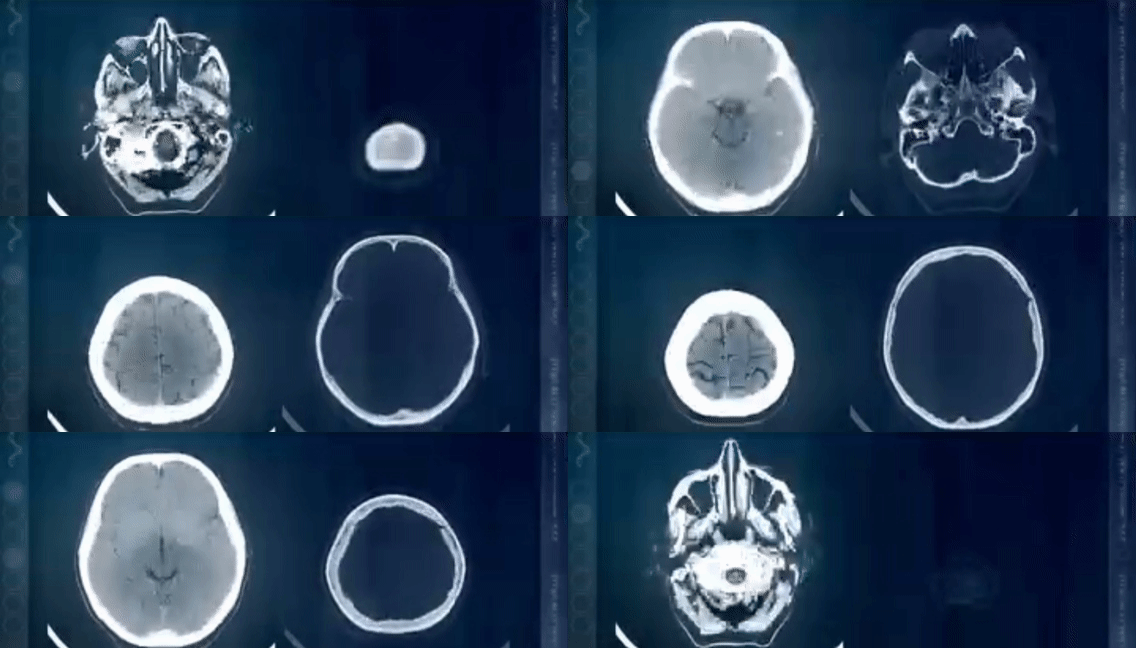
Sometimes step by step, but more often as a combination.
- Neuropsychological testing
- Laboratory diagnostics
- Neuroimaging: MRI, PET
A good specialist will notice possible deviations in time and will be able to intervene in time.
Neuropsychological Testing

Usually, specialists use entire “batteries” of tests that check the condition of the main cognitive functions.
The first consultation with a specialist usually starts with the MMSE test, the Mini-Mental State Examination.
This test includes 10, sometimes more, questions that look quite primitive at first glance.
Based on the answers, it is possible to detect cognitive weakness at an early stage: not yet, or already yes.
After that, there will be more targeted neuropsychological tests, which assess separate functions in more detail.
The five main brain functions assessed by a specialist
- Memory
- Speech
- Intelligence
- Perception
- Recognition: gnosis — the ability to recognize information coming from the senses; movement, or praxis — the ability to preserve and use motor skills.
The main types of neuropsychological tests for assessing memory
The person is asked to memorize by ear and reproduce:
- a list of words
- numbers
- a short passage of text, both orally and in writing
- a sequence of actions
A specialist can assess speech through the person’s own statements.
- how the person speaks
- how easily they find the right words
- whether they can keep the subject of the conversation in mind
To assess intelligence, tests often check generalization:
- categorical thinking
- spatial thinking
- abstract thinking
- the ability to draw conclusions
A person may also be asked to name as many words as possible starting with a certain letter within one minute.
Or their ability to do mental arithmetic may be tested using the test of the German psychiatrist Kraepelin: counting backward at speed — subtract 7 from 100, then subtract another 7 from the resulting number, and so on.
English-Language Cognitive Testing Resources
Here is a list of English-language resources where you can find tests, including some that are used in clinical appointments.
A set of interactive tests for memory, reaction speed, pattern recognition, and language functions. Suitable for those who want several different short tests in one place. This is more of a research-based self-check and cognitive training tool, not medical diagnostics.
An English-language online test of cognitive function and memory. Suitable for those who want to quickly assess their “mental fitness” and get a general reference point for their cognitive state. The test is presented as a validated digital version of a memory assessment similar to those used in memory clinics.
A self-administered test for early signs of cognitive decline, memory problems, and thinking difficulties. Suitable for those who are specifically concerned about symptoms of memory decline and other cognitive functions. This is closer to screening for MCI and early dementia than to a game-like test, but it does not replace a doctor.
Not a game-like test, but a symptom checklist useful for the person themselves or for relatives who notice changes. Good for preparing for a conversation with a GP or doctor: it helps structure the symptoms, their duration, and their impact on everyday life. The site directly states that this is not a diagnostic tool.
A good English-language overview of clinical cognitive screening tools: Mini-Cog, GPCOG, Short IQCODE, AD8, MoCA, SLUMS, and others. Suitable for those who want not just one test, but an understanding of what kinds of cognitive screenings exist and how they differ.
But important: memory, logic, and concentration are delicate things.
If, for example, you did not remember 10 words in a row or froze on a Schulte table, there is no need to panic ahead of time.
This does not remotely mean that neurodegeneration has already “moved in.”
There may be many reasons.
Fatigue, stress, poor sleep, or mood can all interfere with concentration.
Give yourself time. Repeat the test later, several times.
There are also other valid reasons to lose count or get stuck on a logic puzzle with apples.
You have already read more about this in the chapter on pseudodementia.
But if you still feel that something is wrong, go to a neurologist without hesitation. They will determine whether laboratory tests are needed, and which ones.
Laboratory Tests
Here I will give the recommendations of the authoritative neurologist David Perlmutter, who has extensive practical experience in treating and preventing neurodegeneration.
In his opinion,
The first test: blood test for MDA
A blood test for MDA: a test for lipid peroxidation, malondialdehyde.

It shows how strongly the brain is being attacked by free radicals.
These molecules can damage brain cells and lead to diseases such as Alzheimer’s or Parkinson’s.
The level of MDA in the body is used as a marker of oxidative stress and cellular damage.
If the test result is high, it means that antioxidant protection is not coping.
The second test: homocysteine

This is an amino acid, and an excess of it is dangerous for the blood vessels of the brain and heart.
Elevated homocysteine is associated with a deficiency of B vitamins.
If these vitamins are lacking, homocysteine accumulates and may contribute to the development of Alzheimer’s disease.
This is easy to correct, if it is not too late: you simply need to add more sources of vitamin B1 to the diet.
The third test: C-reactive protein

It shows whether there is an inflammatory process.
Any long-term inflammation in the body gradually damages the brain as well.
If the CRP level is high, the cause of inflammation needs to be found and addressed.
The results of these tests should be reviewed by a good neurologist, not by you together with Google or GPT.
Most likely, the specialist will suggest additional biochemical tests.
What else will the neurologist look at?
The presence of related diseases.
For example:
- hypothyroidism
- liver or kidney failure, if they are pronounced enough
- vitamin B12 deficiency

And, of course, some of the 14 most significant risk factors for developing dementia:
- diabetes
- arterial hypertension
A specialist may also recommend a more specific cerebrospinal fluid test, or CSF test, using fluid obtained through a lumbar puncture, for amyloid protein and tau protein.
And, in addition, a cholinesterase test — this enzyme is found in the composition of amyloid plaques in patients diagnosed with Alzheimer’s disease.
And/or they may recommend moving on to neuroimaging methods: MRI, PET.
Neuroimaging
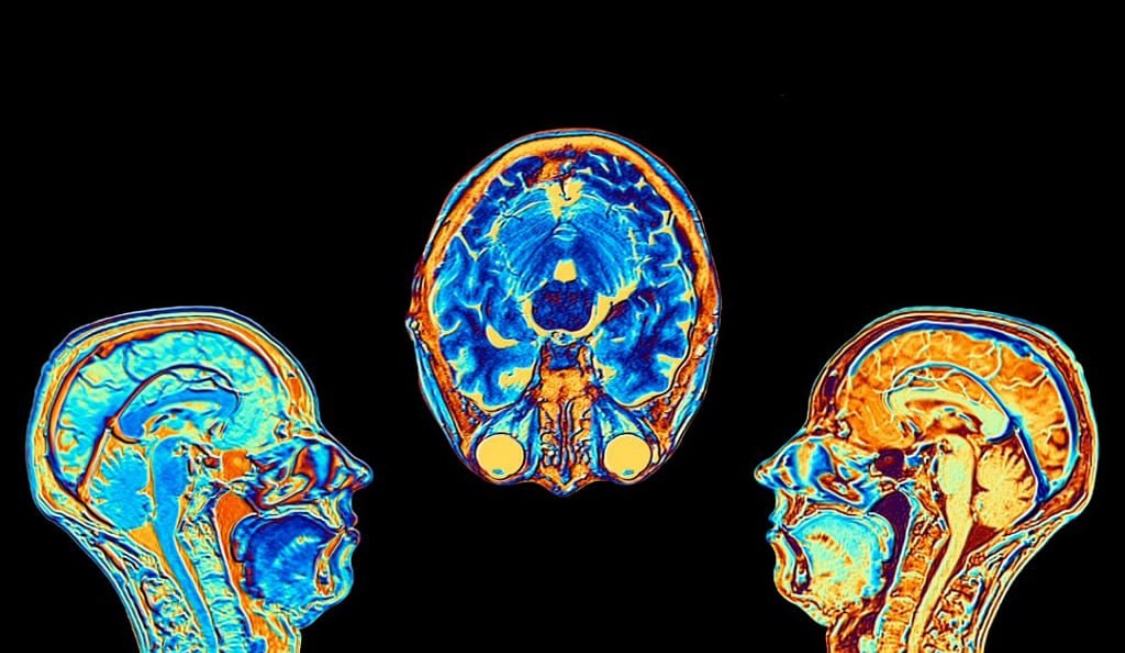
The final word in diagnosis belongs to these methods.
They reveal the location of the pathological process in the brain and its dynamics.
Magnetic resonance imaging

MRI allows specialists to detect abnormalities in the structure and functioning of brain tissue.
For example, signs of Alzheimer’s disease on MRI scans include:
- reduced size of the hippocampus, the part of the brain responsible for memory and thinking functions
- atrophy of the cerebral cortex, especially in the temporal lobes
- widening of the grooves and ventricles in the brain
The truth is, sometimes the situation is already advanced.
Then it can be quite difficult to persuade a kicking and fighting person to climb into that thing.
There are also contraindications: metal implants or foreign bodies can make MRI impossible.
Positron emission tomography
PET is a complex examination of body tissues.
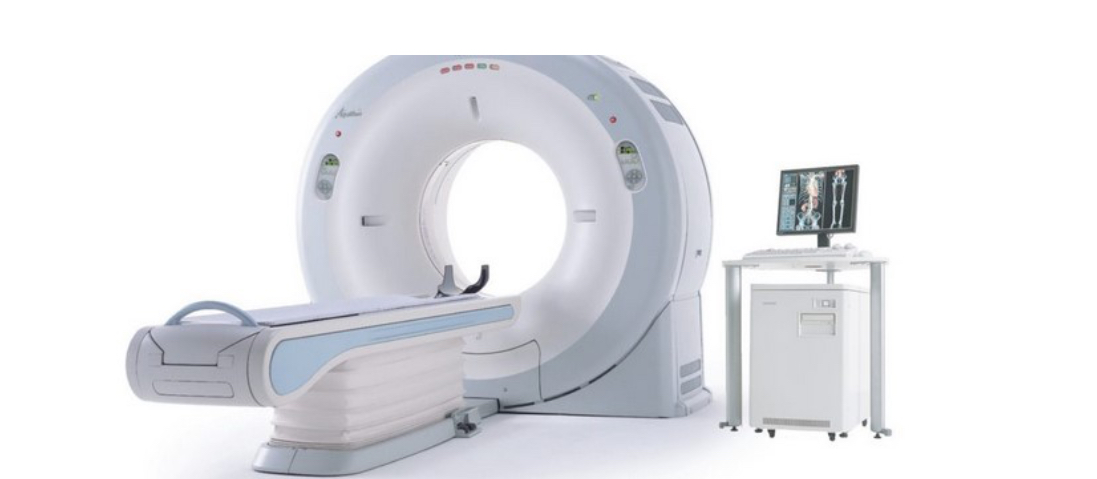
Before the examination, a contrast agent is introduced intravenously, orally, as tablets, or by inhalation, by breathing in a fine aerosol.
In the body, it breaks down and releases positively charged particles — positrons.
The positrons begin to react with electrons, negatively charged particles, in organs and tissues.
As a result, a special electromagnetic radiation is formed, which is recorded by special sensors.
Using PET, specialists can detect accumulations of tau protein in the brain, which are characteristic of Alzheimer’s disease.
PET is contraindicated for people with elevated blood glucose levels.
The information in this chapter will help you keep your finger on the pulse and know what needs to be done, and at what stage.
It is difficult to take in and remember everything at once. Just keep this information close at hand, so you can reread it later.