
“Why Do I Even Need to Know This?”
Some diseases of old people. Diagnosis statistics are growing? Well, that makes sense.
If, in the past, someone died young from an infection, an injury, or gout, today they have a growing chance of living long enough to meet their own Alzheimer’s.
People live longer now, so they more often live long enough to develop neuro-diseases, right?
That is roughly how I imagine my own train of thought would have gone if, some time ago, someone had started telling me these “scary stories.”
There was a time when, for me too, words like “dementia” and “Alzheimer’s disease” sounded like background noise, some kind of semantic static.
Most likely, you, just as I once did, do not even think that one day something might go wrong.
Right now, you are reading these words and clearly understanding their meaning, their connection. It feels so simple and natural.
And it is your brain — right now — processing this information and deciding whether you need it or whether it would be better to switch to something more pleasant and less “mentally demanding.”
Unfortunately, the problem is rather sophisticated: neurodegenerative changes are increasingly appearing as early as age 40–45.
While the time bomb often starts its countdown silently, sometimes more than 10–20 years before symptoms appear.
And when the symptoms do appear, the process is usually already irreversible. From there, it becomes a question of time, individual cognitive reserve, and lifestyle.
The healthy brain program is being laid down now. Not tomorrow.
But first, we need to understand what we are dealing with, right?
Dementia
Translated from Latin, it literally means “without mind” or “without reason”: “de” — without, “mens” — mind.
It is not a disease as such. It is a condition.
Dementia is an “umbrella” term under which a number of diseases are gathered — diseases that gradually take away the very essence of a person: memory, thinking, the ability to move, to speak.
Among these diseases, several are especially ruthless and increasingly common.
Alzheimer’s Disease
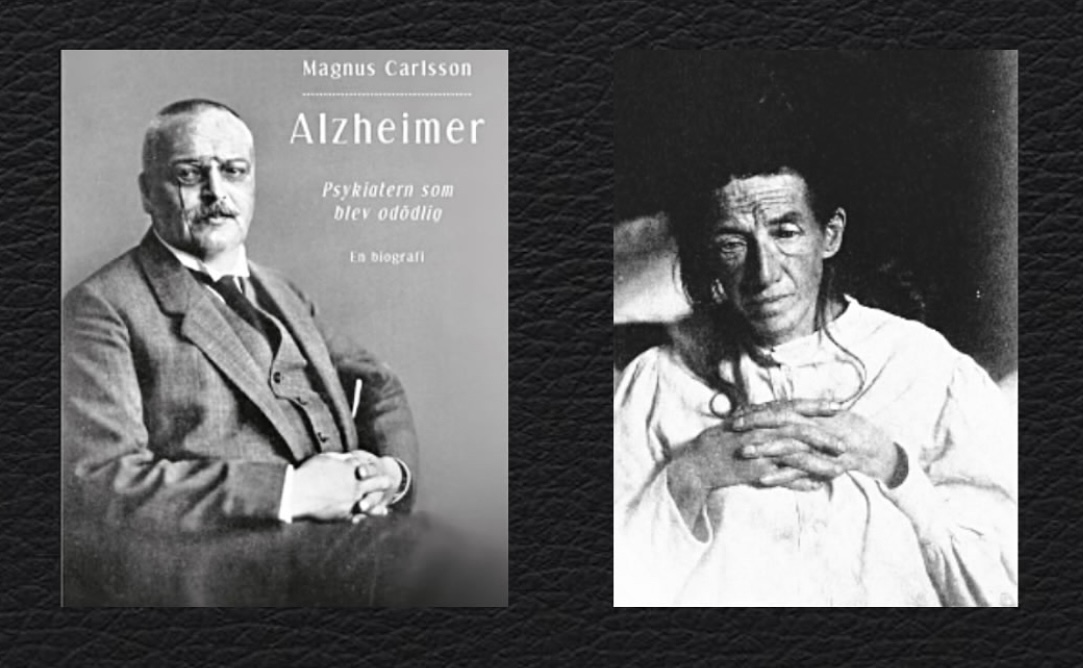
A hundred years ago, Alois Alzheimer, a Bavarian psychiatrist, was observing the rapid development of dementia in a patient who was not yet old, Auguste Deter. After her death, he examined her brain.
There he discovered, for the first time, what medicine today calls the characteristic signs of Alzheimer’s disease: amyloid plaques and neurofibrillary tangles.
The “silent” phase can last for years, even decades. But when the symptoms become obvious, the process is already irreversible.
By that time, usually only half of the affected population of neurons has survived — sometimes as little as 20%.
All the doctor can do is state the presence of an incurable, progressive disorder.
Frontotemporal Dementia
Frontotemporal dementia is a form of dementia in which the frontal and temporal lobes of the brain are affected most strongly.
That is why memory is often not the first thing to suffer. The first changes are often in personality: behavior, speech, and the ability to communicate normally with other people.
It often begins earlier than other types of dementia, including in middle age.
Some people may become impulsive, apathetic, tactless, start behaving strangely, control their actions less well, and fail to notice these changes in themselves.
In others, speech problems come to the foreground: it becomes difficult to find words, build phrases, and understand speech.
Parkinson’s Disease
Parkinson’s disease is a progressive brain disease in which nerve cells involved in movement control are gradually damaged.
Because of this, tremor and muscle rigidity appear. In other words, stiffness, slowed movements, and later, problems with balance may also develop.
In addition to motor symptoms, there can also be non-motor symptoms: reduced sense of smell, constipation, sleep disturbances, changes in mood, and cognitive difficulties.
“And What About Sclerosis? Did You Forget That One?”
Why is multiple sclerosis not neurodegeneration?

That very same “sclerosis” which is so firmly associated with memory problems.
The thing is, multiple sclerosis is an autoimmune disease. In it, neurons are not initially destroyed. The immune system attacks their protective “wiring insulation” — the sheath made of glial cells.
The role of the “foreign agent” in this drama is played by the Epstein–Barr virus, or EBV, which hides inside glial cells and causes the immune system to open “friendly fire” on them.
Unlike neurodegenerative diseases, treatment for MS is aimed at suppressing the autoimmune response and can significantly slow down the course of the disease.
In medicine, sclerosis is not a “disease of forgetfulness,” but a term referring to hardening, scarring, or pathological tissue changes.
It is a separate neurological disease in which the immune system damages the nervous system.
With MS, there can indeed be problems with memory, attention, and the speed of information processing, but it is not the same as dementia.
P.S. And here is another irony: its distribution depends on proximity to the equator — the farther north you live, the higher the risk.
So, we have looked at three of the best-known diagnoses that people most often confuse with one another when they talk about dementia and severe neurological diseases.

Alzheimer’s disease still remains the most dangerous, the most aggressive, and the most widespread of them. It accounts for the majority of dementia cases.
Although other forms, including frontotemporal dementia, are also extremely severe and destructive.
Parkinson’s disease is also very common. And most likely, you have seen people with it more than once — you may simply not have thought before that behind the trembling and slowed movements there is not just “shaking,” but a severe brain disorder that can completely change a person’s life.
And separately, we have dispelled the myth about multiple sclerosis. Many people habitually put it in the same category as dementia and see it as an almost hopeless diagnosis. But this is not the case.
Multiple sclerosis is not a form of dementia, and its prognosis is generally much more favorable, because in MS, neurons are not destroyed in the same way as they are in classic neurodegenerative diseases.
Questions for Self-Check

- Why is dementia not a disease?
- What are the two main changes that happen in the brain in Alzheimer’s disease?
- How does Alzheimer’s disease manifest itself?
- What is frontotemporal dementia?
- What is Parkinson’s disease?
- Why is sclerosis not dementia?